

New L6M1 Test Materials & Valid L6M1 Test Engine
L6M1 Updated Exam Dumps [2025] Practice Valid Exam Dumps Question
CIPS L6M1 Exam Syllabus Topics:
| Topic | Details |
|---|---|
| Topic 1 |
|
| Topic 2 |
|
| Topic 3 |
|
| Topic 4 |
|
| Topic 5 |
|
NEW QUESTION # 13
SIMULATION
Zoe has recently formed a cross-functional team to work on a new secret project called Project X. There are 8 members of Project X and these members have different ages, cultural backgrounds, lengths of service at the company and personalities.
Discuss 5 reasons why teams can fail, relating these to potential issues Zoe may face with her team, and discuss ways Zoe can overcome them. (25 points)
Answer:
Explanation:
See the Answer is the explanation
Explanation:
Why Teams Fail: Challenges in Cross-Functional Teams and Solutions for Zoe's Project X Cross-functional teams, such as Zoe's Project X team, bring together diverse skills, perspectives, and experiences. While this diversity can foster innovation, it also presents challenges that can lead to team failure if not managed properly. Below are five key reasons why teams fail, how these issues may arise in Project X, and how Zoe can overcome them.
1. Lack of Clear Goals and Direction
How This Affects Project X:
If Zoe does not establish clear objectives, deliverables, and expectations, team members may work in different directions, leading to inefficiencies and frustration. Given that Project X is secret, the lack of transparency may cause confusion and disengagement.
Solution:
✔ Clearly define the project's mission, objectives, and success criteria at the outset.
✔ Use SMART goals (Specific, Measurable, Achievable, Relevant, Time-bound) to set expectations.
✔ Hold regular briefings to ensure all team members understand their role in the project.
2. Poor Communication
How This Affects Project X:
With team members from different backgrounds, experience levels, and personalities, communication styles may vary. Some may hesitate to share ideas, while others may dominate discussions. This can lead to misunderstandings, silos, and frustration.
Solution:
✔ Establish clear communication channels, such as scheduled meetings, email updates, and collaboration tools (e.g., Slack, Microsoft Teams).
✔ Foster an open communication culture where all members feel comfortable sharing ideas.
✔ Encourage active listening to ensure all voices are heard.
3. Conflict and Personality Clashes
How This Affects Project X:
Diversity in age, culture, experience, and personalities can cause friction. Senior employees may resist younger members' ideas, while different working styles may lead to disagreements. If conflicts go unmanaged, the team can become dysfunctional.
Solution:
✔ Conduct team-building exercises to build rapport and understanding among members.
✔ Implement a conflict resolution strategy, ensuring disputes are addressed constructively.
✔ Encourage a collaborative mindset, where team members focus on shared goals rather than personal differences.
4. Lack of Trust and Team Cohesion
How This Affects Project X:
If team members do not trust each other or the leader, they may be reluctant to share ideas, take risks, or collaborate. The secrecy of Project X may also create skepticism and uncertainty among members.
Solution:
✔ Foster psychological safety, where team members feel safe sharing ideas without fear of judgment.
✔ Encourage transparency by sharing relevant information about the project whenever possible.
✔ Organize team bonding activities to strengthen relationships and build trust.
5. Ineffective Leadership
How This Affects Project X:
If Zoe fails to lead effectively, team members may feel disengaged, unsupported, or micromanaged. A lack of clear decision-making can result in delays and frustration.
Solution:
✔ Zoe should adopt a situational leadership style, adjusting her approach based on team needs.
✔ Balance guidance with autonomy, ensuring team members feel empowered but supported.
✔ Regularly recognize and appreciate team members' contributions to boost morale.
Conclusion
For Project X to succeed, Zoe must proactively address these common team failures by setting clear goals, fostering strong communication, managing conflicts, building trust, and leading effectively. By implementing these strategies, she can ensure her cross-functional team remains engaged, motivated, and productive, driving Project X to success.
NEW QUESTION # 14
SIMULATION
It has recently come to light that Fakeborough City Council has been engaging in discriminatory labour practices. These allogations include paying male employees more than female employees for completing the same type of work and excluding some employees from promotional opportunities for no good reason. Discuss how employees at Fakeborough City Council can deal with discrimination at work, and the risks that Fakeborough City Council are currently facing. (25 points).
Answer:
Explanation:
See the Answer is the explanation
Explanation:
Overall explanation
Below you will find how you can plan and draft the essay. Remember this is an example of one way you could approach the question. At Level 6 the questions are much more open so your response may be completely different and that's okay.
Essay Plan
Introduction - discrimination undermines principles of fairness, equality and justice Section 1: Employees should: use internal reportinc mechanisms, seek legal advice, talk to union, use ADR, keep records Section 2: Council's risks: legal, reputational, productivity, loss of talented staff, regulatory scrutiny Conclusion: Council needs to promptly address these issues Example Essay Discrimination in the workplace is a grave issue that undermines the principles of fairness, equality, and justice. In this essay, we will discuss how employees at Fakeborough City Council can deal with discrimination at work and the risks currently faced by the council as a result of these discriminatory practices.
Dealing with Discrimination at Work:
Internal Reporting Mechanisms: Employees should utilize internal reporting mechanisms established by Fakeborough City Council to address discrimination issues. These mechanisms typically include channels for lodging complaints, such as HR departments or designated ombudsman officers. There may also be a whistleblowing channel which would inform senior leaders of issues such as the pay gap between male and female workers. By reporting incidents, employees can initiate formal investigations into these types of discriminatory practices.
Seek Legal Advice: If internal mechanisms do not yield satisfactory results or if employees fear retaliation, seeking legal advice from employment law specialists is a viable option. Legal professionals can provide guidance on pursuing legal remedies, such as filing discrimination claims with employment tribunals or courts. One way to do this may be for the employees at Fakeborough Council to speak to their trade unions or workers' councils, which could help individuals collectively address discrimination concerns. These representatives can negotiate with the council on behalf of affected employees and advocate for fair and equal treatment.
Document Incidents: Employees should keep detailed records of discriminatory incidents, including dates, times, locations, witnesses, and any relevant communication or documentation. These records can serve as valuable evidence in any legal proceedings or internal investigations.
Seek Mediation or Conciliation: Mediation or conciliation services can be explored as alternative dispute resolution methods. These processes aim to facilitate constructive dialogue between employees and the council to resolve discrimination issues amicably.
Risks Faced by Fakeborough City Council:
Legal Consequences: Fakeborough City Council is at risk of facing legal consequences if discrimination allegations are substantiated. If they are found to have paid male workers more than female workers, this would be in violation of the Equalities Act 2010. Consequences of a breach of this legislation may involve fines and compensation payments to affected employees.
Reputational Damage: Discrimination revelations can lead to significant reputational damage for the council. Negative media coverage and public backlash can erode public trust and support, making it challenging to attract and retain talent or secure funding for essential projects. As this is a public sector organisation, Fakeborough do not need to worry about loss to profits, as a private company would in a similar situation, however, damage to reputation could have other financial impacts such as losing out on opportunities. For example losing the opportunity to host events such as sporting events in the city because the event organisers don't want to be associated with the Council, or losing funding from central government.
Employee Morale and Productivity: Discrimination negatively impacts employee morale and productivity. Employees may disengage from their work, leading to decreased productivity, absenteeism, and high turnover rates, which can further strain the council's resources. This is particularly true when opportunities to advance are not equal. For example if Fakeborough council are only promoting white employees, then employees of other ethnicities will be disincentivised from working hard as they know that their work will not be compensated or rewarded.
Regulatory Scrutiny: Regulatory bodies, including the Equality and Human Rights Commission (EHRC) in the UK, may investigate Fakeborough City Council's employment practices if discrimination allegations arise. This can result in further legal obligations and potential penalties.
Loss of Talent: Discriminatory practices can drive away talented employees who seek workplaces with fair and inclusive cultures. This can result in a loss of valuable human capital, hindering the council's ability to deliver services effectively.
In conclusion, addressing discriminatory labour practices at Fakeborough City Council requires employees to use internal reporting mechanisms, seek legal advice, engage with employee representatives, document incidents, and explore mediation or conciliation. The council faces significant risks, including legal consequences, reputational damage, diminished employee morale and productivity, regulatory scrutiny, and the loss of talent. It is in the council's best interest to promptly address and rectify discriminatory practices to foster a fair, inclusive, and productive work environment while mitigating these risks.
NEW QUESTION # 15
SIMULATION
Assess the suitability of the Visionary leadership style in relation to the procurement function of an organisation (25 points)
Answer:
Explanation:
See the Answer is the explanation
Explanation:
Introduction
Leadership plays a crucial role in shaping the procurement function within an organization, influencing strategic decisions, supplier relationships, and overall operational efficiency. One of the most impactful leadership styles is Visionary Leadership, characterized by the ability to inspire, motivate, and guide an organization toward a long-term strategic vision. In the context of procurement, where efficiency, cost management, ethical sourcing, and supplier collaboration are critical, the suitability of a visionary leader can significantly impact the success of procurement strategies.
This essay assesses the suitability of the Visionary Leadership Style in procurement by exploring its characteristics, advantages, challenges, and its impact on various aspects of procurement functions.
Understanding Visionary Leadership
A visionary leader is someone who has a clear and compelling vision of the future and possesses the ability to motivate teams and stakeholders to work towards achieving that vision. This leadership style is associated with strategic foresight, innovation, adaptability, and strong communication skills. Visionary leaders focus on long-term goals rather than short-term fixes and inspire procurement teams to align their objectives with the broader mission of the organization.
Key Characteristics of Visionary Leadership
Strategic Foresight - The ability to anticipate future trends, risks, and opportunities in procurement and supply chain management.
Inspirational Communication - The ability to effectively convey a vision, ensuring team members and stakeholders are aligned with procurement strategies.
Adaptability and Innovation - Encouraging new technologies, digital procurement solutions, and sustainable sourcing practices.
People-Centric Approach - Focusing on team empowerment, supplier collaboration, and ethical procurement practices.
Long-Term Focus - Prioritizing sustainability, strategic supplier partnerships, and risk mitigation over short-term cost-cutting measures.
The Suitability of Visionary Leadership in Procurement
1. Enhancing Strategic Procurement Planning
Procurement is not just about purchasing goods and services; it is a strategic function that directly impacts an organization's cost efficiency, risk management, and competitive advantage. A visionary leader ensures that procurement aligns with the organization's long-term business goals, such as:
Sustainable sourcing to meet corporate social responsibility (CSR) objectives.
Digital transformation in procurement (e.g., AI-driven supplier selection, blockchain for transparency).
Supplier diversification to mitigate geopolitical and supply chain risks.
By setting a clear strategic direction, a visionary leader ensures procurement teams focus on innovation, risk mitigation, and value creation rather than just cost-cutting.
2. Driving Supplier Relationship Management (SRM)
One of the most critical functions of procurement is managing supplier relationships effectively. Visionary leaders recognize that strong long-term partnerships with suppliers are more beneficial than short-term cost reductions. They emphasize:
Collaboration over transactional relationships - Developing mutually beneficial relationships with key suppliers.
Ethical and sustainable procurement - Ensuring suppliers adhere to fair labor practices, environmental sustainability, and legal compliance.
Innovation through supplier partnerships - Encouraging suppliers to introduce new technologies, automation, and process improvements.
A visionary leader in procurement fosters trust and cooperation with suppliers, ensuring that procurement decisions align with both business goals and ethical standards.
3. Encouraging Innovation and Technology Adoption in Procurement
The procurement function is evolving rapidly due to technological advancements. Visionary leaders drive the adoption of:
E-procurement systems to enhance efficiency and transparency.
Data analytics and AI for supplier evaluation and risk management.
Blockchain technology for improving supply chain traceability and contract enforcement.
Sustainability-focused procurement models, such as circular supply chains to reduce waste.
By embracing digital transformation, visionary leaders modernize procurement operations, making them more agile, cost-effective, and resilient.
4. Building an Agile and Motivated Procurement Team
A key responsibility of procurement leaders is to develop talent and foster a high-performance culture. Visionary leaders:
Empower procurement teams by promoting continuous learning and professional development.
Encourage innovation in procurement strategies.
Foster an inclusive and collaborative work culture, which increases motivation and efficiency.
For instance, a visionary procurement leader may encourage procurement professionals to develop negotiation skills, data analysis competencies, and sustainability knowledge, ensuring that the team is well-equipped for future challenges.
5. Managing Risks and Uncertainties in Procurement
Procurement leaders must deal with global supply chain disruptions, price fluctuations, and geopolitical risks. A visionary leader is proactive in identifying and mitigating risks by:
Developing a diversified supplier base to reduce dependency on a single source.
Implementing contingency planning and supply chain resilience strategies.
Using predictive analytics to anticipate market shifts and adjust procurement strategies accordingly.
For example, during the COVID-19 pandemic, visionary procurement leaders ensured supply chain continuity by quickly pivoting to alternative suppliers and leveraging digital procurement solutions.
Challenges of Visionary Leadership in Procurement
Despite its many advantages, visionary leadership also presents challenges in a procurement environment, including:
Slow Decision-Making in Urgent Situations
While visionary leaders focus on the long-term, procurement often requires quick decision-making during supply chain disruptions or urgent purchasing needs.
A balance between strategic foresight and operational efficiency is necessary.
Resistance to Change from Stakeholders
Employees and suppliers may resist new procurement technologies, sustainability policies, or process changes introduced by visionary leaders.
Effective change management and communication strategies are needed to overcome resistance.
High Implementation Costs
Digital transformation, supplier development programs, and sustainability initiatives require significant investment.
Organizations must evaluate the cost-benefit balance when adopting long-term procurement strategies.
Alignment with Organizational Priorities
Procurement is often seen as a cost-saving function, whereas visionary leadership focuses on long-term value creation.
Visionary leaders must align their strategies with C-suite expectations to gain executive support.
Conclusion
Visionary leadership is highly suitable for the procurement function of an organization, particularly in driving strategic planning, supplier collaboration, innovation, talent development, and risk management. By fostering a long-term, value-driven approach, visionary leaders transform procurement from a cost-centric function into a strategic asset.
However, visionary leadership must be balanced with operational agility, ensuring that procurement remains responsive to market conditions and business needs. While long-term strategic foresight is essential, procurement teams must also be equipped to handle immediate challenges efficiently.
Ultimately, the most effective procurement leaders integrate visionary thinking with pragmatic decision-making, ensuring that procurement delivers both short-term operational efficiency and long-term strategic value.
Final Answer Structure for Maximum Marks (25 Points)
Introduction (3 Points) - Importance of leadership in procurement, introduction to visionary leadership.
Key Characteristics of Visionary Leadership (4 Points) - Strategic foresight, innovation, adaptability, communication, and long-term focus.
Suitability in Procurement (12 Points) -
Enhancing strategic planning.
Strengthening supplier relationships.
Driving innovation and technology.
Developing a skilled procurement team.
Managing procurement risks.
Challenges of Visionary Leadership (4 Points) - Decision-making speed, stakeholder resistance, cost implications, organizational alignment.
Conclusion (2 Points) - Summary of benefits, need for a balanced approach.
NEW QUESTION # 16
SIMULATION
Explain, with examples, how a Procurement Professional can apply the CIPS Code of Conduct in relation to ethical business practices (25 points).
Answer:
Explanation:
See the Answer is the explanation
Explanation:
Overall explanation
Below you will find how you can plan and draft the essay. Remember this is an example of one way you could approach the question. At Level 6 the questions are much more open so your response may be completely different and that's okay.
Essay Plan
Introduction - what is it?
Paragraph 1 - standing
Paragraph 2- integrity
Paragraph 3 - promote
Paragraph 4 - proficiency
paragraph 5 - regulations
Conclusion - it's super important
Example Essay
The CIPS (Chartered Institute of Procurement & Supply) Code of Conduct serves as a guiding framework for procurement and supply chain professionals to maintain ethical standards and professional integrity in their work. This essay will explore how procurement professionals can apply various aspects of the CIPS Code of Conduct to ensure ethical business practices. It will address each of the five core principles outlined in the Code of Conduct: Standing, Integrity, Promotion, Proficiency, and Regulations, providing relevant examples for each.
Standing:
One of the key principles of the CIPS Code of Conduct is to enhance and protect the standing of the profession. Procurement professionals can apply this by avoiding conduct that would bring the profession or CIPS into disrepute. For example, if a procurement manager discovers evidence of bid rigging among potential suppliers, adhering to this principle would involve promptly reporting the suspicious activity to their organization's compliance department. By doing so, they not only uphold professional standards, but also safeguard the organization's reputation.
Integrity:
Maintaining personal and professional integrity is fundamental to ethical business practices. The Code of Conduct emphasizes that procurement professionals should never engage in conduct, either professional or personal, that would bring the profession or CIPS into disrepute. For instance, if a supply chain manager is offered an extravagant gift by a vendor during negotiations, they should decline the gift and report the offer to their supervisor or compliance department. This action upholds personal and professional integrity, ensuring impartiality in supplier selection.
Promotion:
Procurement professionals can actively promote ethical practices within their organizations and supply chains, aligning with the Code of Conduct. For example, they can advocate for sustainable and ethical sourcing practices. If a procurement manager selects suppliers who adhere to fair labour standards and environmentally responsible practices, they set an example that encourages others to prioritize ethical practices. By actively promoting these principles, they contribute to a culture of integrity and social responsibility.
Proficiency:
Enhancing and protecting the standing of the profession also involves a commitment to proficiency. Procurement professionals can apply this principle by continually developing and maintaining their professional skills and competencies. For instance, attending training programs and industry conferences regularly can help them stay updated on the latest ethical standards and best practices. Pursuing certifications related to ethical sourcing, such as sustainable supply chain management credentials, further demonstrates their commitment to proficiency.
Regulations:
The CIPS Code of Conduct underscores the importance of compliance with relevant laws and regulations in procurement and supply chain management. Procurement professionals should ensure that all sourcing activities align with legal requirements. For example, they can conduct due diligence to confirm that suppliers adhere to anti-corruption laws, trade restrictions, and environmental regulations. This not only minimizes legal and ethical risks but also ensures ethical conduct within the supply chain.
Conclusion:
In conclusion, procurement professionals play a crucial role in maintaining ethical business practices by applying the principles outlined in the CIPS Code of Conduct. By adhering to these principles related to Standing, Integrity, Promotion, Proficiency, and Regulations, they contribute to the ethical and responsible functioning of their organizations and the broader supply chain industry. Upholding ethical standards not only safeguards professional integrity but also fosters trust and transparency in procurement and supply chain management.
Tutor Notes
- The CIPS code of conduct has come up as a 25 point question in Level 4 and Level 5 exams, so there is no reason to believe it couldn't come up at Level 6. Nothing has changed in terms of content, but at this Level be prepared to give more examples of it being applied in practice.
- Another way this could be asked is in relation to a case study. E.g. Mark is a procurement professional and X and Y are going on at his organisation. Using the CIPS Code of Conduct, what should he do about X and Y?
NEW QUESTION # 17
SIMULATION
Explain what is meant by the following terms: equality, discrimination and diversity (10 points) Discuss 5 benefits to having diversity in an organisation / supply chain (15 points)
Answer:
Explanation:
See the Answer is the explanation
Explanation:
Overall explanation
Below you will find how you can plan and draft the essay. Remember this is an example of one way you could approach the question. At Level 6 the questions are much more open so your response may be completely different and that's okay.
Essay Plan
Intro - managers should be sensitive to these three areas
1) Equality (Equalities Act 2010)
2) Discrimination
3) Diversity
5 benefits:
4) Innovation
5) Avoids groupthink
6) Better market understanding
7) Happier employees
8) Useful in international business
Conclusion - world is interconnected, diversity is a good thing
Example Essay
Managers who are sensitive to the needs and differences of others are effective, successful leaders. For this reason it is important to distinguish between the following terms, which are often confused:
Equality refers to the state of being equal in rights, opportunities, treatment, or status, regardless of factors such as race, gender, age, religion, disability, or other characteristics. It emphasizes fairness, justice, and the absence of discrimination in the treatment of individuals and groups. Equality is shrined into UK law in the Equalities Act 2010 meaning that it is illegal not to treat people the same.
Discrimination is the unjust or prejudicial treatment of individuals or groups based on their differences, either actual or perceived. Discrimination involves actions or practices that disadvantage or harm certain individuals or groups, often leading to unequal treatment and opportunities. For example only hiring white-skinned employees or not letting a woman become a member of a golf club.
Diversity encompasses the range of differences and variations among individuals. Embracing diversity means recognizing, respecting, and valuing differences such as language, background and culture. Diversity goes beyond the visible traits such as race and gender and includes both inherent and acquired attributes such as educational level and political beliefs.
Benefits of Diversity in an Organization/Supply Chain
Enhanced Creativity and Innovation: Diverse teams bring together individuals with varied backgrounds, experiences, and perspectives. This diversity of thought and ideas fosters creativity and innovation as team members approach problems and challenges from different angles. Creative solutions lead to a competitive advantage for an organisation and the ability to adapt to changing market demands.
Improved Decision-Making: Diversity in decision-making helps avoid groupthink, a phenomenon where homogeneous groups tend to conform to a single perspective. Different viewpoints and perspectives lead to more robust discussions and more well-rounded decisions. Organizations thus benefit from a wider range of ideas and strategies to address complex issues.
Broader Market Understanding: Diversity within an organization's workforce reflects the diversity of its customer base and the broader market. Diverse teams are better equipped to understand the needs, preferences, and behaviours of a diverse customer population. This understanding can inform product development, marketing strategies, and customer engagement, leading to increased market share.
Increased Employee Engagement and Satisfaction: An inclusive workplace that values diversity fosters a sense of belonging among employees. Employees are more likely to be engaged and satisfied when they feel their perspectives and contributions are respected and appreciated. Higher job satisfaction can lead to improved retention rates and reduced turnover costs.
Global Competence and Adaptability: In a globalized world, organizations with diverse workforces and supply chains are better equipped to navigate international markets and cultural nuances. Employees from diverse backgrounds bring valuable insights into global business practices, languages, and cultural sensitivities. This global competence enables organizations to expand into new markets and adapt to changing international dynamics.
In summary, diversity in an organization or supply chain brings a multitude of benefits, including enhanced creativity, improved decision-making, better market understanding, increased employee engagement, and global competence. Embracing diversity not only aligns with principles of equality and reduces discrimination, but also contributes to an organization's overall success and sustainability in a diverse and interconnected world.
Tutor Notes
- To gain extra points in an essay like this, you could bring in some real life examples of discrimination and diversity. The best one I can think of at the moment is Birmingham City Council which is currently in the news for pay discrimination https://www.bbc.com/news/uk-england-birmingham-66730165
- You could also use some quotes on the topic as part of the introduction or conclusion:
- "Diversity is not about how we differ. Diversity is about embracing one another's uniqueness." - Ola Joseph
- "We all should know that diversity makes for a rich tapestry, and we must understand that all the threads of the tapestry are equal in value no matter their colour." - Maya Angelou
- "Diversity is not a compliance issue. Diversity is a growth strategy." - Tiffany Jana
- Study guide p. 198
- Additional reading: The Business Case For Diversity is Now Overwhelming. Here's Why | World Economic Forum (weforum.org)
NEW QUESTION # 18
SIMULATION
Discuss the difference between mentoring and coaching. As well as mentoring and coaching, what other activities are completed by a manager? What skills does this require? (25 points)
Answer:
Explanation:
See the Answer is the explanation
Explanation:
(A) Difference Between Mentoring and Coaching (10 Points)
Both mentoring and coaching are essential for employee development, but they serve different purposes. Below is a structured comparison: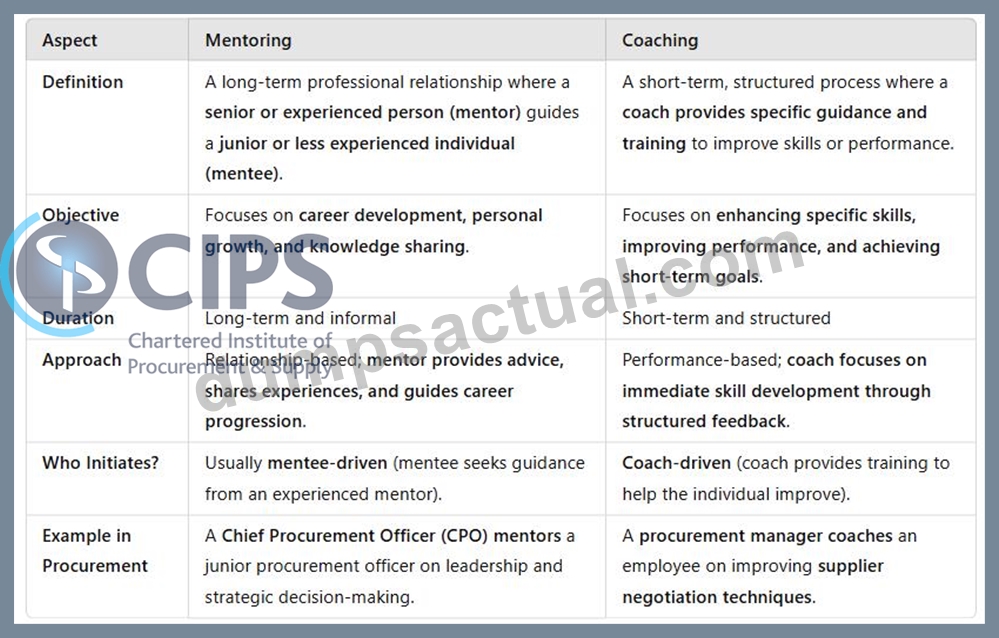
Key Takeaways:
Mentoring is long-term, relationship-driven, and focused on personal/career development.
Coaching is short-term, performance-driven, and focused on specific skill enhancement.
(B) Other Activities Completed by a Manager (10 Points)
Apart from mentoring and coaching, managers in procurement and supply chain roles perform several key functions, including:
Strategic Planning and Decision-Making (2 Points)
Managers align procurement strategies with business goals, ensuring cost savings, risk management, and supplier selection.
Example: Deciding whether to source locally or internationally based on cost, lead time, and risk factors.
Performance Management & Employee Development (2 Points)
Managers conduct performance reviews, set KPIs, and ensure employees meet procurement objectives.
Example: Monitoring contract compliance and assessing supplier delivery performance.
Supplier and Stakeholder Relationship Management (2 Points)
Managers negotiate contracts, build relationships with suppliers, and collaborate with internal stakeholders.
Example: Engaging in supplier development programs to improve quality and efficiency.
Problem-Solving and Conflict Resolution (2 Points)
Managers handle supplier disputes, contract issues, and logistical challenges in procurement operations.
Example: Managing disputes with suppliers over late deliveries or non-compliance.
Compliance and Ethical Procurement Practices (2 Points)
Managers ensure adherence to procurement regulations, ethical sourcing policies, and sustainability goals.
Example: Implementing an anti-bribery and corruption policy in procurement operations.
(C) Skills Required for These Activities (5 Points)
To successfully carry out these responsibilities, a manager needs the following key skills:
Leadership & People Management (1 Point)
Ability to motivate, mentor, and coach employees while fostering a productive work environment.
Negotiation & Communication (1 Point)
Strong skills to negotiate contracts, resolve supplier disputes, and manage stakeholder expectations.
Strategic Thinking & Decision-Making (1 Point)
Capability to analyze procurement data and make informed strategic decisions to reduce costs and risks.
Problem-Solving & Conflict Resolution (1 Point)
Skill in addressing supply chain disruptions, supplier conflicts, and operational inefficiencies.
Ethical and Compliance Knowledge (1 Point)
Understanding of procurement laws, ethical sourcing, and corporate governance.
NEW QUESTION # 19
SIMULATION
Discuss the 5 approaches to management of the Blake Mouton Managerial Grid. How can this be applied to the role of a procurement manager? (25 points)
Answer:
Explanation:
See the Answer is the explanation
Explanation:
Introduction
Management effectiveness is critical for organizational success, particularly in functions like procurement, where balancing cost efficiency, supplier relationships, and operational effectiveness is key. The Blake Mouton Managerial Grid provides a framework for evaluating leadership styles based on a manager's concern for people (team members, stakeholders, suppliers) versus concern for production (task completion, efficiency, and profitability).
This essay will discuss the five approaches to management outlined in the Blake Mouton Managerial Grid and explore how procurement managers can apply them to enhance procurement performance.
Understanding the Blake Mouton Managerial Grid
The Blake Mouton Managerial Grid (1964) classifies management styles based on two axes:
Concern for People - The degree to which a leader considers employee motivation, satisfaction, and well-being.
Concern for Production (or Task) - The extent to which a leader focuses on achieving organizational goals, efficiency, and productivity.
This results in five distinct leadership styles, each with its strengths and weaknesses.
The Five Approaches to Management in the Blake Mouton Grid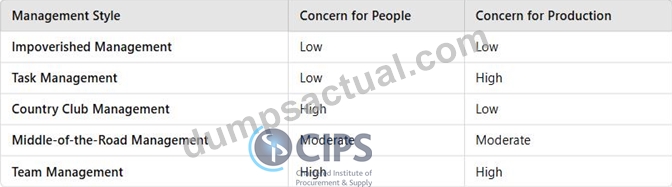
1. Impoverished Management (Low Concern for People, Low Concern for Production) Description:
Leaders with an impoverished management style exert minimal effort to manage people or production.
They often avoid decision-making, fail to motivate employees, and show little interest in organizational goals.
This approach leads to low productivity, disengaged employees, and poor procurement outcomes.
Impact on Procurement Management:
❌ Weak supplier management - Poor relationships with suppliers may lead to delivery delays and contract failures.
❌ No cost control - Procurement teams may fail to negotiate favorable pricing due to lack of leadership.
❌ Lack of strategic alignment - Procurement fails to support organizational goals, resulting in inefficiencies.
Example:
A procurement manager who ignores supplier performance reviews, does not enforce contract terms, and fails to manage procurement risks would be practicing an impoverished management style.
2. Task Management (High Concern for Production, Low Concern for People) Description:
Task-oriented managers focus solely on efficiency, cost-cutting, and productivity, while neglecting employee well-being and engagement.
This style is highly authoritative and focuses on strict rules, efficiency, and results-driven processes.
Impact on Procurement Management:
✅ Strict cost control - The procurement team will focus on cutting costs and maximizing efficiency.
✅ Strong compliance enforcement - Ensures strict adherence to procurement policies and regulations.
❌ Supplier dissatisfaction - Overly aggressive cost-cutting and negotiation tactics may harm supplier relationships.
❌ Low employee morale - Procurement assistants may feel undervalued, leading to high staff turnover.
Example:
A procurement manager who focuses only on cost reduction and efficiency, without considering supplier relationships or team well-being, would fit this style.
3. Country Club Management (High Concern for People, Low Concern for Production) Description:
A country club manager prioritizes employee satisfaction and relationships but neglects productivity and performance.
This results in a friendly, low-pressure environment, but with low accountability and inefficiency.
Impact on Procurement Management:
✅ Strong supplier and stakeholder relationships - Procurement teams collaborate well with suppliers but may overpay due to a lack of tough negotiations.
✅ High team morale - Employees feel valued and motivated.
❌ Lack of cost efficiency - Over-prioritizing relationships may result in weak cost controls.
❌ Ineffective risk management - Procurement managers may fail to enforce strict supplier performance criteria.
Example:
A procurement manager who develops strong relationships with suppliers but fails to hold them accountable for poor performance is practicing country club management.
4. Middle-of-the-Road Management (Moderate Concern for People, Moderate Concern for Production) Description:
Balances both people and task concerns, but does not excel in either.
Ensures some level of efficiency and employee satisfaction, but lacks a strong strategic direction.
Impact on Procurement Management:
✅ Balanced supplier relationships - Ensures cost efficiency while maintaining supplier goodwill.
✅ Moderate employee engagement - The team feels reasonably motivated, but lacks innovation and strong leadership.
❌ Missed cost-saving opportunities - Procurement might fail to maximize value due to a lack of strategic focus.
❌ Lack of strong risk mitigation - The procurement manager may not aggressively manage risks, leading to supply chain disruptions.
Example:
A procurement manager who performs adequately but does not drive significant improvements or cost savings fits this style.
5. Team Management (High Concern for People, High Concern for Production) Description:
The most effective leadership style, where the manager prioritizes both team well-being and achieving high performance.
Encourages collaboration, innovation, and accountability.
Focuses on both supplier relationships and cost efficiency.
Impact on Procurement Management:
✅ Optimized supplier performance - Ensures strong contract management, strategic sourcing, and supplier collaboration.
✅ High employee morale and performance - Employees are engaged, trained, and motivated to drive procurement success.
✅ Balanced cost and quality approach - Focuses on achieving cost efficiency while maintaining quality standards.
✅ Encourages innovation in procurement - Uses data analytics, AI, and technology to improve procurement processes.
Example:
A procurement manager who mentors their team, fosters supplier partnerships, and ensures cost savings while maintaining ethical procurement practices follows a team management approach.
Application of the Blake Mouton Grid to Procurement Management
The Blake Mouton Grid helps procurement managers identify their leadership style and improve team performance and supplier management. Here's how:
Developing High-Performance Procurement Teams - Procurement managers should strive for a team management approach, ensuring both efficiency and employee engagement.
Enhancing Supplier Relationship Management - A balanced approach ensures fair negotiations, long-term partnerships, and cost efficiency.
Strategic Cost Management - Managers should avoid being overly task-focused (cost-cutting) or too lenient on supplier pricing.
Improving Risk Management - Ensuring strong governance and compliance while maintaining good supplier relationships.
Continuous Improvement - Encouraging innovation, sustainability, and procurement technology adoption.
Conclusion
The Blake Mouton Managerial Grid provides valuable insights into leadership effectiveness in procurement management. Among the five approaches:
Team Management is the most effective style for procurement managers, balancing supplier relationships, cost efficiency, and employee engagement.
Task Management may be useful in cost-control situations, but must be balanced with ethical supplier management.
Country Club, Middle-of-the-Road, and Impoverished Management styles are less effective, as they fail to balance procurement efficiency and supplier relationships.
By adopting a "Team Management" approach, procurement managers can drive strategic value, optimize supplier performance, and enhance procurement team capabilities, ultimately contributing to long-term business success
NEW QUESTION # 20
SIMULATION
Discuss supplier due diligence in relation to the case study below. How and why should it be implemented? (25 points) Delicious Ltd is a cake manufacturing organisation with complex supply chains. They are based in the UK and source raw ingredients such as sugar and flour internationally. They use over 20 different suppliers, many of whom are in the commodities industry and some from low-cost countries.
Answer:
Explanation:
See the Answer is the explanation
Explanation:
Overall explanation
Below you will find how you can plan and draft the essay. Remember this is an example of one way you could approach the question. At Level 6 the questions are much more open so your response may be completely different and that's okay.
Essay Plan
Introduction- what is due diligence - assessing and evaluating suppliers.
Section 1 - how to do due diligence: risk assessments, supplier selection, audits, contracts, continuous processes, communication Section 1 - why - quality issues, risk to business continuity, ethical reasons, customer/ stakeholder requirements Conclusion: it's essential for Delicious Ltd (relate back to case study).
Example Essay
Supplier due diligence is a critical process for organizations like Delicious Ltd, which rely on complex international supply chains to source commodity items. Due diligence involves assessing and evaluating the performance, reliability, and ethical practices of suppliers to ensure they meet the company's standards and requirements.
Here's how supplier due diligence can be implemented:
Risk Assessment: Begin by identifying the potential risks within the supply chain. This may include geopolitical risks, natural disasters, economic instability, and even supplier-specific risks like production delays or quality issues. It should also look at ethical considerations such as the use of forced or child labour in the supply chain and the working conditions of those employed by suppliers.
Supplier Selection: Carefully select suppliers based on criteria such as their track record, reputation, financial stability, quality control processes, and ethical practices. Delicious Ltd should consider multiple sources for critical raw materials such as sugar and flour to diversify risk. This means if one supplier goes bust, or is unable to provide the required quantities, Delicious Ltd can source materials elsewhere. The Kraljic Matrix would be a useful tool here.
Audits and Inspections: Delicious Ltd can conduct regular audits and inspections of suppliers' facilities and practices to ensure they meet the company's standards. These audits can include quality checks, ethical compliance checks, and supply chain continuity assessments. They can use an independent 3rd party to do this.
Contractual Agreements: Delicious Ltd should define clear terms and conditions in supplier contracts, specifying quality requirements, delivery schedules, pricing structures, and dispute resolution mechanisms. These contracts should reflect the results of due diligence assessments.
Continuous Monitoring: Establish a system for ongoing monitoring of suppliers' performance. This includes regular communication, feedback mechanisms, and performance reviews to ensure suppliers maintain the desired standards. Delicious Ltd could use the Demming Plan Do Check Act cycle here.
Contingency Planning: Develop contingency plans for potential supply chain disruptions. This could involve identifying alternative suppliers or establishing safety stock levels for critical raw materials. For example, by holding a surplus stock of flour in it's own warehouse, Delicious Ltd mitigates the risk of late deliveries interrupting production.
Transparency and Reporting: Delicious Ltd should be transparent about supplier due diligence efforts with stakeholders, including customers, investors, and regulatory bodies. They should regularly report on compliance with ethical and sustainability standards and can publish findings on their website.
For Delicious Ltd, implementing supplier due diligence is essential for several reasons:
Quality Assurance: Ensuring the quality of raw ingredients is crucial for a cake manufacturing organization like Delicious Ltd. By conducting due diligence, the company can verify that suppliers meet specific quality standards, which is essential for producing consistent and high-quality products. If an ingredient such as flour was contaminated, this may result in Delicious Ltd's customers falling ill. This is a risk that needs to be eliminated.
Supply Chain Reliability: International supply chains can be susceptible to disruptions, such as natural disasters, political instability, or economic fluctuations. Supplier due diligence helps identify potential risks within the supply chain and allows the company to develop contingency plans to minimize disruptions.
Ethical Sourcing: Customers and stakeholders increasingly demand transparency and ethical sourcing practices. Due diligence enables Delicious Ltd to assess whether suppliers adhere to ethical standards, such as fair labour practices and environmental sustainability, which can protect the company's reputation and market position. Delicious Ltd risk losing customers, and thus profit, if they fail to conduct due diligence.
Cost Control: By evaluating suppliers' financial stability and pricing structures, the company can negotiate better deals, optimize costs, and avoid unexpected price hikes or financial risks associated with supplier instability.
In conclusion, implementing supplier due diligence is essential for Delicious Ltd due to its complex international supply chains. It helps ensure quality, reliability, and ethical practices among suppliers, while also mitigating risks associated with the supply chain. By effectively implementing due diligence processes, the company can enhance its reputation, protect against disruptions, and maintain cost control.
Tutor Notes
- Remember that due diligence isn't just about ethics. That's a big part of it (checking supply chains for modern day slavery etc). Due diligence is about getting the 5 Rights of Procurement (remember this from Level 4?), it's about ensuring supply chain security and continuity, and about risk aversion too.
- To improve on the essay above you could talk more in detail about where you can get information on suppliers, such as D&B and Companies House for financial information, customer references and checking registrations such as ISO14001. Some of these are specific to the UK, so Delicious Ltd may need to look at international equivalents. You don't have to know what these are for the exam though so don't worry!
- How deep you conduct supplier due diligence depends on how important the supplier is to you. You could mention this in your conclusion and bring it back to Delicious Ltd - the flour supplier is probably very important, but the supplier of stationary for the workers in the office is probably less so. So Delicious need to do thorough due diligence on the flour supplier and less on the stationary guys. Kraljic is the tool for this.
- Because this is a case study question, you don't have to bring in any real life examples. But if the question was more open e.g. discuss how a procurement manager can do Due Diligence, you could talk about a real life example, so have one in your back pocket for the exam
- For a really high score you could mention this: Home - KnowTheChain
NEW QUESTION # 21
SIMULATION
Discuss three of the following areas of employment law: minimum wage, overtime and holiday pay, working hours, Health and Safety at Work, equality (25 points).
Answer:
Explanation:
See the Answer is the explanation
Explanation:
Overall explanation
Below you will find how you can plan and draft the essay. Remember this is an example of one way you could approach the question. At Level 6 the questions are much more open so your response may be completely different and that's okay.
Essay Plan
Intro - explain which three; minimum wage, working hours, H&S
P1 - minimum wage
P2 - working hours
P3 - H&S
Conclusion - law is always evolving
Example Essay
Employment law in the United Kingdom has evolved over the years to safeguard the rights and interests of employees while providing a framework for fair and equitable employment practices. This essay delves into three crucial areas of employment law: minimum wage, working hours, and health and safety.
Minimum Wage. The National Minimum Wage Act 1998 and subsequent amendments established the legal framework for minimum wage rates in the UK. The current legislation sets different minimum wage rates for various age groups. Currently (2023) for those aged 23 and over the minimum wage is £10.42 per hour. This is rising to £11 in 2024. Younger workers will earn less, with those on an apprenticeship, considerably less. Minimum wage legislation has significantly improved the earnings of low-paid workers and reduced income inequality. It ensures that employees receive a fair wage for their labour, promoting economic stability and social well-being.
Interestingly, not all countries have a minimum wage or set it hourly. For example in Spain, minimum wage is set out monthly (around 1000 euros/ month). Sweden doesn't have a minimum wage at all. Sweden relies on collective bargaining agreements negotiated between employers and labour unions to determine wage rates and employment conditions. These agreements are sector-specific and cover a wide range of industries, effectively setting minimum wage standards at the industry level rather than through legislation. This approach allows for flexibility and tailoring of wage rates to different sectors of the economy but also means that minimum wage levels can vary depending on the specific collective agreement in place within a given industry.
Working Hours: The Working Time Regulations 1998 (WTR) and the EU Working Time Directive establish legal limits on working hours, rest breaks, and paid leave for workers in the UK. The WTR also introduced the concept of the "opt-out," allowing workers to voluntarily exceed the 48-hour weekly working time limit. Working time regulations promote work-life balance, protect employees from excessive working hours, and enhance health and well-being. The "opt-out" provision provides flexibility but must be implemented with respect to workers' rights. It is common in the UK for Junior Doctors to opt out to ensure they have enough time to complete their training within a specific timeframe. Some training programs require a certain number of hours or procedures to be completed during a specific period. Another reason for opting out is the opportunity to earn more money, particularly if overtime is paid at a high rate.
Health and Safety: The Health and Safety at Work Act 1974 is the cornerstone of health and safety legislation in the UK. It places duties on employers to ensure the health, safety, and welfare of their employees, as well as others affected by their work activities. Specific regulations, such as the Management of Health and Safety at Work Regulations 1999, provide additional guidance. One of the main areas this legislation covers is the importance of completing risk assessments. The case of R v. Tangerine Confectionery Ltd (2018) emphasized the importance of risk assessments in preventing workplace accidents. The company was fined for failing to adequately assess the risk of an employee's arm getting trapped in a machine, resulting in serious injury. Health and Safety legislation has led to safer workplaces, reduced accident rates, and improved employee well-being. Employers are legally obligated to identify and mitigate workplace risks, ensuring the protection of their workforce.
In conclusion, UK employment law, encompassing minimum wage, working hours, and health and safety, plays a pivotal role in safeguarding employees' rights, promoting fair labour practices, and ensuring safe working environments. As employment dynamics continue to evolve, it is imperative that employment law remains adaptable, responsive, and protective of employees in an ever-changing work landscape.
NEW QUESTION # 22
SIMULATION
Sarah is the manager of a small cake shop. She employs 8 staff members and has several local suppliers. Her approach to leadership is the Contingency approach. Explain what is meant by this approach (5 points) and discuss how Sarah could use this approach to ensure her business is successful. (25 points)
Answer:
Explanation:
See the Answer is the explanation
Explanation:
Introduction
Effective leadership plays a crucial role in the success of a business, especially in small enterprises where employee motivation, supplier management, and operational efficiency directly impact profitability. Leadership styles should be adaptable to different situations, team dynamics, and external challenges.
Sarah, the manager of a small cake shop, adopts the Contingency Approach to Leadership, which means she adjusts her leadership style based on the specific circumstances her business faces. This essay will first explain what the Contingency Approach is and then discuss how Sarah can apply it to ensure her cake shop thrives.
1. What is the Contingency Approach to Leadership? (5 Points)
Definition
The Contingency Approach to Leadership suggests that there is no single best way to lead-instead, the best leadership style depends on the situation. A leader must evaluate environmental factors, team capabilities, business challenges, and supplier relationships to determine the most effective leadership style.
Key Principles of the Contingency Approach
Situational Adaptability - Leaders must adjust their behavior based on the context, team skills, and challenges.
Flexibility in Decision-Making - Some situations require authoritative leadership, while others benefit from a collaborative approach.
Focus on Environmental Factors - External factors such as market trends, customer demand, and supplier reliability influence leadership decisions.
Influence of Team Maturity - The leadership approach changes depending on whether employees are highly skilled and independent or require supervision and guidance.
Example of the Contingency Approach
If Sarah's cake shop faces a sudden staff shortage, she may need to adopt a directive leadership style, giving clear instructions to manage the crisis.
If she is introducing a new product line, she might collaborate with her team, encouraging creativity and innovation.
2. How Sarah Can Use the Contingency Approach to Ensure Business Success (20 Points) Sarah's cake shop operates in a highly customer-focused industry where quality, efficiency, and customer service are essential. Applying the Contingency Approach effectively can help her improve operations, manage staff effectively, and strengthen supplier relationships.
(A) Adjusting Leadership Style for Employee Management
Sarah employs 8 staff members with varying skill levels, meaning she must tailor her leadership style to each employee's capabilities.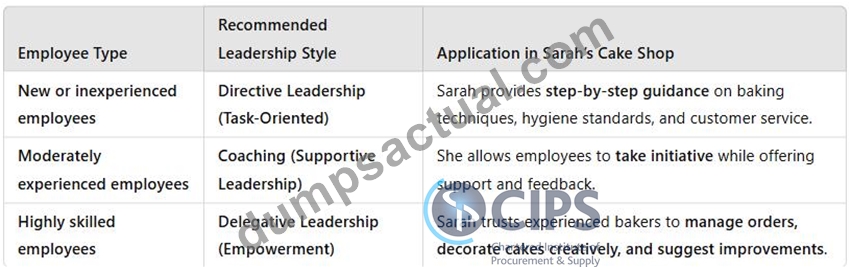
By adapting her approach to different staff members, Sarah ensures high productivity, job satisfaction, and skill development within her team.
(B) Supplier Relationship Management
Sarah's cake shop depends on local suppliers for ingredients such as flour, sugar, and dairy. A contingency approach helps her manage these relationships effectively:
Handling Reliable Suppliers (Low-Risk Situations)
Uses a collaborative leadership style, fostering strong long-term relationships.
Works closely with suppliers to negotiate bulk discounts and ensure high-quality ingredients.
Dealing with Supplier Disruptions (High-Risk Situations)
Uses directive leadership to make quick alternative sourcing decisions.
If a supplier fails to deliver ingredients on time, Sarah must quickly find replacements to keep operations running smoothly.
By adapting her approach based on supplier reliability, Sarah ensures consistent ingredient supply, cost efficiency, and business continuity.
(C) Responding to Business Challenges and Market Changes
The food industry is highly competitive, and Sarah must adjust her leadership approach to respond effectively to external challenges such as:
Seasonal Demand Fluctuations (Christmas, Weddings, Special Events)
Uses a participative approach, involving her team in planning for high-demand periods.
Encourages staff to suggest new cake designs, flavors, and promotional offers.
Handling Customer Complaints and Service Issues
Uses a customer-focused leadership approach, ensuring that employees prioritize customer satisfaction and feedback resolution.
Trains employees in effective communication and problem-solving.
Implementing New Technologies (e.g., Online Ordering System)
Uses a coaching approach, training staff step-by-step on the new system while gathering their feedback.
By staying flexible and responsive, Sarah ensures that her cake shop remains competitive, innovative, and customer-focused.
(D) Managing Workload and Crisis Situations
In any small business, unexpected crises can arise, such as staff shortages, equipment breakdowns, or raw material shortages. Sarah can use different leadership styles based on urgency:
Crisis Situations (e.g., Oven Malfunction, Sudden Staff Absences)
Uses a directive approach, giving clear instructions to ensure quick problem resolution.
Example: If a baker calls in sick on a busy day, Sarah reallocates tasks immediately to keep up with orders.
Daily Operations (Stable Work Conditions)
Uses a participative approach, allowing employees to contribute ideas for improving workflows and efficiency.
By using contingency-based leadership, Sarah ensures her cake shop runs smoothly under different circumstances.
(E) Encouraging Teamwork and Employee Motivation
A successful cake shop requires a motivated, engaged team. Sarah can use different leadership techniques to build a strong team culture:
Team Meetings and Brainstorming
Uses a democratic approach, encouraging employees to share creative cake designs and customer engagement strategies.
Recognizing Employee Achievements
Uses a supportive approach, rewarding employees for exceptional performance and customer service.
By adapting to different employee needs, Sarah builds a motivated, skilled, and loyal team, reducing turnover and improving overall performance.
Conclusion
The Contingency Approach to Leadership is an effective strategy for Sarah as it allows her to adapt to various challenges in her cake shop, ensuring smooth operations, strong supplier management, and motivated employees.
By modifying her leadership style based on the situation, employee skill levels, supplier performance, and business challenges, Sarah can:
✅ Develop a high-performing team by offering the right mix of guidance and independence.
✅ Manage supplier relationships effectively by adjusting her leadership approach based on reliability and market conditions.
✅ Handle operational challenges efficiently, ensuring business continuity and customer satisfaction.
Ultimately, flexibility and adaptability are key to her success, making the Contingency Approach an ideal leadership style for small business management.
NEW QUESTION # 23
SIMULATION
Explain 5 qualities of an effective leader (10 points) Discuss the role of a leader in relation to the procurement and supply chain function of an organisation (15 points)
Answer:
Explanation:
See the Answer is the explanation
Explanation:
(A) Five Qualities of an Effective Leader (10 Points)
Effective leadership is crucial for the success of any organization, particularly in strategic procurement and supply chain management. Below are five key qualities that define an effective leader:
Vision and Strategic Thinking (2 Points)
A successful leader has a clear vision for the future and can develop strategic plans to achieve organizational goals.
In procurement, this means aligning supply chain strategies with overall business objectives, such as cost reduction, sustainability, and supplier relationship management.
Integrity and Ethical Leadership (2 Points)
Ethical leaders act with honesty, transparency, and fairness, setting high ethical standards for their teams.
In procurement, integrity ensures fair supplier selection, compliance with procurement laws, and avoiding corruption or conflicts of interest.
Decision-Making and Problem-Solving Skills (2 Points)
Leaders must analyze complex situations, consider different perspectives, and make informed decisions.
In supply chain management, this involves risk assessment, supplier negotiation, and resolving disruptions (e.g., supply shortages, logistics issues, or geopolitical risks).
Communication and Influence (2 Points)
An effective leader clearly communicates the organization's goals and expectations to internal and external stakeholders.
In procurement, this involves negotiating contracts, managing supplier relationships, and ensuring cross-functional collaboration within the organization.
Emotional Intelligence and People Management (2 Points)
Emotional intelligence (EQ) includes self-awareness, empathy, motivation, and social skills, which are essential for managing teams.
In procurement, this helps leaders build trust, motivate employees, and handle conflicts with suppliers or internal teams effectively.
(B) Role of a Leader in Procurement and Supply Chain Functions (15 Points) Leaders in procurement and supply chain management play a crucial strategic role in ensuring the efficiency, sustainability, and ethical integrity of the organization's supply chain. Below are five key roles a leader plays:
Setting Strategic Direction in Procurement (3 Points)
A leader defines procurement objectives in line with corporate strategy, such as cost reduction, supplier diversity, risk management, and sustainability.
Example: A Chief Procurement Officer (CPO) may implement a strategy to reduce reliance on a single supplier and diversify sourcing to minimize risks.
Ensuring Ethical and Sustainable Procurement (3 Points)
Leaders must establish and enforce ethical procurement policies to avoid fraud, bribery, or unethical supplier practices.
Example: Ensuring compliance with Corporate Social Responsibility (CSR) initiatives, such as sourcing from ethical suppliers who follow fair labor practices.
Supplier Relationship and Risk Management (3 Points)
A leader is responsible for building strong supplier relationships that foster trust, reliability, and long-term partnerships.
They also identify and mitigate risks in the supply chain, such as supply disruptions, geopolitical risks, and financial instability of suppliers.
Driving Innovation and Continuous Improvement (3 Points)
Leaders encourage teams to adopt innovative technologies such as Artificial Intelligence (AI), blockchain, and data analytics in procurement.
Example: Implementing e-procurement systems to enhance efficiency and transparency in supplier transactions.
Developing and Empowering the Procurement Team (3 Points)
A leader must focus on talent development, upskilling procurement professionals, and fostering a culture of continuous learning.
Example: Providing training on contract management, negotiation skills, and supplier evaluation techniques to enhance team capabilities.
NEW QUESTION # 24
SIMULATION
Discuss the role that independent organisations in the third sector can play with regards to ethical business practices. Your answer may make reference to one or more of the following: United Nations, Tradecraft UK, Walk Free Foundation, IMF, ILO. (25 points)
Answer:
Explanation:
See the Answer is the explanation
Explanation:
Overall explanation
Below you will find how you can plan and draft the essay. Remember this is an example of one way you could approach the question. At Level 6 the questions are much more open so your response may be completely different and that's okay.
Essay Plan
Introduction - what is the 3rd sector?
P1 - role of advocate - promoting ethical business practices
P2 - role of watchdog
P3 - role of researcher - example of UNICEF and Cocoa
P4 - role of influencing global policies e.g. ILO Decent Work Agenda
P5 - Decent Work Agenda - explanation
Conclusion - work of third sector is critical to support advances in ethical business practices Example Essay Independent organizations in the third sector, also known as non-governmental organizations (NGOs) and civil society groups, play a crucial role in promoting ethical business practices on a global scale. This essay explores the multifaceted role of independent organizations in advancing ethical business practices and will focus on the work of the United Nations and the International Labour Organization (ILO).
Independent organizations in the third sector serve as advocates for ethical business practices. They raise awareness about ethical issues, such as fair labour practices, environmental sustainability, and responsible supply chain management. By conducting research, publishing reports, and engaging in public discourse, these organizations bring attention to areas where ethical improvements are needed.
Moreover, independent organizations often act as watchdogs, monitoring the actions of businesses and governments to ensure adherence to ethical standards. They use tools like corporate social responsibility (CSR) evaluations and human rights impact assessments to hold organizations accountable for their practices. For instance, NGOs may investigate and expose cases of labour exploitation or environmental violations in global supply chains.
For example, the International Labour Organization (ILO), a specialized agency of the United Nations, initiated efforts to combat child labour and forced labour in the cocoa industry. Children, often working in hazardous conditions, were involved in harvesting cocoa beans, which raised serious ethical and human rights concerns . The ILO along with UNICEF (United Nations Children's Fund) conducted studies, surveys, and assessments to gather data on child labour and forced labour. This resulted in the creation of the Harkin-Engel Protocol. Under the protocol, the chocolate and cocoa industry committed to taking specific actions to eliminate the worst forms of child labour and forced labour from cocoa production, encouraging businesses to adopt responsible sourcing practices, implement traceability measures, and invest in community development programs. While challenges persist, ILO/ UNICEF's efforts have contributed to significant improvements in labour conditions and a greater emphasis on ethical practices in the cocoa supply chain.
Furthermore, the United Nations, particularly the Economic and Social Council (ECOSOC), provides a platform for independent organizations to engage with governments and international institutions on ethical business practices. ECOSOC consults with NGOs, enabling them to contribute to discussions on sustainable development goals, human rights, and economic policies. This engagement ensures that ethical considerations are integrated into global policymaking.
Another example of how third sector organisations contribute to ethical business practices is the International Labour Organization (ILO) conventions, such as the 2018 Decent Work Agend a. This framework encompasses four main pillars
1) Employment: creating jobs and expanding opportunities for all. The goal is to promote full and productive employment, ensure equal pay for equal work, and reduce informal employment. It also emphasizes the importance of addressing unemployment, underemployment, and vulnerable employment, particularly in developing countries.
2) Social Protection: it highlights the need for comprehensive social protection systems. This includes access to essential health services, maternity protection, unemployment benefits, disability benefits, and pensions. Social protection helps individuals and families cope with various economic and social risks.
3) Social Dialogue: the active participation of workers, employers, and governments in decision-making processes related to labour policies and regulations. Social dialogue is essential for achieving fair and equitable labour practices, including collective bargaining and labour rights.
4) Rights at Work: the right to freedom of association, the right to collective bargaining, the elimination of forced labour and child labour, and the elimination of discrimination in the workplace. Ensuring these rights helps create a fair and just work environment.
The Decent Work Agenda represents a comprehensive and integrated approach to labour and employment issues, aiming to improve the well-being of workers and their families while fostering economic growth and development. It addresses the challenges and opportunities arising from changes in the world of work, such as globalization, technological advancements, and demographic shifts.
In conclusion, independent organizations in the third sector are instrumental in advancing ethical business practices globally. Their roles as advocates, monitors, collaborators, and educators are essential in holding businesses and governments accountable for their actions. Through engagement with institutions like the United Nations and initiatives like the ILO's Decent Work Agenda, these organizations contribute to the promotion of ethical practices in business, fostering a more just and sustainable global economy. Their efforts complement the broader goals of achieving social responsibility, human rights, and environmental sustainability in the business world.
Tutor Notes
- Out of those listed, you could get a lot of content out of the UN and ILO (remember the ILO is part of the UN). These would be my personal choice to pick and learn about because there are lots of examples you could talk about. I chose Cocoa and Child Labour. Other things you could have wrote about include:
- ILO Convention No. 29 (Forced Labour Convention, 1930): This convention requires member states to suppress the use of forced labour in all its forms, including slavery, debt bondage, and forced or compulsory labour.
- ILO Convention No. 105 (Abolition of Forced Labour Convention, 1957): This convention complements Convention No. 29 and aims to abolish forced labour through measures such as effective enforcement of laws and policies.
- Goal 8 of the United Nations Sustainable Development Goals (SDGs) specifically targets decent work and economic growth. Target 8.7 within this goal calls for the "immediate and effective measures to eradicate forced labour, end modern slavery and human trafficking and secure the prohibition and elimination of the worst forms of child labour." The UN promotes the SDGs as a framework for addressing forced labour and related issues.
- The UN provides technical assistance to countries, helping them develop and implement legislation and policies to combat forced labour. This assistance includes capacity building, training, and sharing best practices.
- Tradecraft UK, Walk Free and IMF are also mentioned in the study guide. Here's some info you could have included if you wished to talk about them in your essay:
- Tradecraft = IMPORTANT - as of 2023 this organisation is in Administration. The study guide and exam questions were written before this happened, so may refer to it in the present tense. Your response should mention it in the past tense. Tradecraft was a UK-based Fair Trade Organisation that sold products that were traded fairly in the UK. Their mission was to fight poverty through promoting approaches to trade that will help people in developing countries change their lives. It developed programmes working with poor producers in Africa and Asia. E.g. helped small Indian tea producers negotiate higher prices and get representation on the Tea Board of India. Also helped African Framers negotiate for better PPE and provided training to them so they're more confident to negotiate contract terms such as not allowing late changes to quantities. Traidcraft goes into Administration - One World Shop
- Walk Free Foundation = Aim is to eliminate modern slavery- publishes the Global Slavery Index. They engage in research, advocacy, and awareness-raising activities. Walk Free Foundation Official Website
NEW QUESTION # 25
SIMULATION
Describe four reasons a person may resist change and four ways a leader can overcome resistance to change (25 points).
Answer:
Explanation:
See the Answer is the explanation
Explanation:
Overall explanation
Below you will find how you can plan and draft the essay. Remember this is an example of one way you could approach the question. At Level 6 the questions are much more open so your response may be completely different and that's okay.
Essay Plan
Intro: what is change?
P1: fear
P2: poor communication and misunderstanding
P3: economic conditions change (e.g. impact on working conditions or pay) P4: perception (because they believe the change won't be beneficial) P5: leader can overcome resistance through: providing compelling rationale for the change P6: leader can overcome resistance through: Employee involvement (participative management style) P7: leader can overcome resistance through: providing training P8: leader can overcome resistance through: being honest and using timely communication Conclusion: change management is complex and requires overcoming many obstacles. Need to plan. Use tools such as Kotter's Change Management Principles, Lewin's Forcefield Analysis and RACI Example Essay Change, in the context of organizations, refers to a departure from the existing state or processes toward a new and often better state. Change can encompass various aspects, such as altering processes, introducing new technologies, or modifying company culture. However, individuals within the organization often resist change for a variety of reasons. This essay will explore four common reasons for resistance to change and four effective strategies leaders can employ to overcome this resistance.
Four Reasons for Resistance to Change:
Fear: People tend to resist change when they fear the unknown. Change often brings uncertainty about the future, job security, and one's ability to adapt. An example of this is an older employee resisting a change to using a new e-procurement system, because they are mistrustful of technology.
Poor Communication and Misunderstanding: Inadequate or unclear communication about the change can lead to misunderstandings and misinterpretations. Lack of information can result in resistance due to confusion or distrust. For example an employee may hear of a change accidently in the hallway and pass this on, without knowing the full story, they may make a decision to resist the change.
Economic Conditions Change: If people believe that the change will negatively impact them, for example increasing their workload, stress levels or financial take homes, they may resist change. An example of this is during a company restructure when people believe that merging of job roles will result in them having to do more work.
Perception: Individuals may resist change when they perceive it as unnecessary, or detrimental to their interests. This resistance often stems from a belief that the change won't be beneficial. For example a manager may wish to introduce a new way to categorise inventory, but warehouse staff believe that this change will make counting inventory take longer.
Four Ways a Leader Can Overcome Resistance to Change:
Providing Compelling Rationale for the Change: Leaders can overcome resistance by clearly and convincingly explaining the reasons behind the change. Demonstrating how the change aligns with the organization's goals and how it will benefit employees can help mitigate fear and uncertainty.
Employee Involvement (Participative Management Style): Inviting employees to participate in the change process can reduce resistance. When individuals feel they have a say in the change, they are more likely to embrace it. Leaders can solicit input, involve employees in decision-making, and create a sense of ownership in the change.
Providing Training: Resistance often stems from a lack of knowledge or skills required for the change. Leaders can provide training and resources to equip employees with the necessary tools to adapt successfully. This not only reduces resistance but also enhances employee confidence and competence. This would be particularly helpful for changes involving new systems and ways of working.
Being Honest and Using Timely Communication: Effective communication is critical in overcoming resistance. Leaders should be honest about the reasons for the change, acknowledge potential challenges, and provide regular updates. Timely and transparent communication builds trust and reduces uncertainty.
In conclusion, change management is a complex process that requires leaders to address and overcome various sources of resistance. Understanding the reasons behind resistance is essential for effective change leadership. As Atkinson (2005) notes: resistance to change should not be viewed negatively, it is a positive and healthy response. Employing strategies like providing a compelling rationale, involving employees, offering training, and maintaining open and honest communication can help leaders navigate the complexities of change successfully. Moreover, change management tools such as Kotter's Change Management Principles, Lewin's Forcefield Analysis, and RACI (Responsible, Accountable, Consulted, Informed) matrices can further aid leaders in planning and executing change initiatives efficiently and with the least possible resistance.
Tutor Notes
- With this type of question try to give as many examples as you can.
- Other things you could have mentioned in your essay include:
- Reasons to resist change: out of habit, because other people are resisting it (sheep mentality), loss of freedom, scepticism, impact the change may have on their personal life (e.g. effect on work life balance).
- Dealing with resistance to change; Top management sponsorship and HR involvement, Understanding of human behavour and why people may resist change, Corporate culture supports change, Adjustment to performance mechanisms, KPIs, Efficient organisational structure, Rewards (monetary and otherwise)
NEW QUESTION # 26
SIMULATION
Describe and evaluate one model that can be used to classify different forms of stakeholders (25 points)
Answer:
Explanation:
See the Answer is the explanation
Explanation:
Stakeholder Classification: Using Mendelow's Matrix
Stakeholders play a crucial role in the success of an organization, influencing decisions, resources, and operations. To effectively manage stakeholders, organizations need a model that helps classify and prioritize stakeholders based on their influence and interest. One widely used framework is Mendelow's Stakeholder Matrix.
This essay describes Mendelow's Matrix, evaluates its effectiveness, and discusses its advantages and limitations.
Mendelow's Stakeholder Matrix
Mendelow's Stakeholder Matrix (1991) is a strategic tool that classifies stakeholders based on two key factors:
Power - The ability of a stakeholder to influence the organization's decision-making.
Interest - The level of concern a stakeholder has about the organization's activities.
Based on these factors, stakeholders are placed into one of four quadrants:
Stakeholder Group
Power
Interest
Management Strategy
Key Players
High
High
Actively engage and involve
Keep Satisfied
High
Low
Monitor closely, engage when necessary
Keep Informed
Low
High
Provide regular updates, listen to concerns
Minimal Effort
Low
Low
Monitor but minimal engagement
1. Key Players (High Power, High Interest)
These stakeholders have significant influence over the organization and strong interest in its operations.
Examples:
✔ Senior executives, major shareholders, government regulators.
✔ Large customers or strategic suppliers.
Management Strategy:
✔ Actively involve them in decision-making.
✔ Consult regularly and address their concerns immediately.
Evaluation:
✔ Managing this group well ensures strong support for company initiatives.
✘ Ignoring them can lead to significant resistance and business risks.
2. Keep Satisfied (High Power, Low Interest)
These stakeholders have high power but low interest, meaning they can affect the organization significantly if ignored.
Examples:
✔ Government bodies that enforce regulations but do not intervene unless necessary.
✔ Wealthy investors with minimal involvement in daily operations.
Management Strategy:
✔ Engage periodically to keep them satisfied.
✔ Provide updates on key decisions without overwhelming them.
Evaluation:
✔ Proper management prevents unexpected opposition.
✘ If engagement is too frequent, they may lose interest or disengage.
3. Keep Informed (Low Power, High Interest)
These stakeholders do not have direct power but are highly interested in the company's actions.
Examples:
✔ Employees, local communities, NGOs concerned about sustainability.
✔ Small-scale suppliers who depend on the company.
Management Strategy:
✔ Communicate regularly through reports, newsletters, or meetings.
✔ Listen to concerns and provide transparency.
Evaluation:
✔ Keeping them engaged builds positive public relations and internal morale.
✘ If ignored, they may escalate concerns to higher-power stakeholders.
4. Minimal Effort (Low Power, Low Interest)
These stakeholders have little influence and low interest, meaning they do not require significant attention.
Examples:
✔ General public who have no direct impact on the company.
✔ Non-core suppliers with small contracts.
Management Strategy:
✔ Monitor their concerns occasionally.
✔ Avoid unnecessary engagement unless their influence changes.
Evaluation:
✔ Avoiding excessive engagement saves time and resources.
✘ If their interest or power grows, they may require reclassification.
Evaluation of Mendelow's Stakeholder Matrix
Advantages of the Model
✔ Simple and Practical - Easy to understand and apply in various industries.
✔ Helps Prioritize Stakeholders - Ensures critical stakeholders receive appropriate attention.
✔ Supports Strategic Decision-Making - Guides communication and engagement efforts.
✔ Adaptable - Can be used for mergers, change management, procurement, and public relations.
Limitations of the Model
✘ Does Not Capture Stakeholder Dynamics - Stakeholder power and interest change over time, requiring constant reassessment.
✘ Overlooks Stakeholder Relationships - Some stakeholders influence others (e.g., media can amplify employee concerns).
✘ Power and Interest Can Be Subjective - Classifying stakeholders requires judgment and regular review.
Conclusion
Mendelow's Stakeholder Matrix is a powerful tool for classifying and managing stakeholders in any organization. By categorizing stakeholders based on power and interest, leaders can develop effective engagement strategies and mitigate risks associated with key stakeholders. However, stakeholder influence is fluid, so ongoing analysis is necessary for long-term success. Despite its limitations, this model remains a fundamental framework for strategic stakeholder management.
NEW QUESTION # 27
SIMULATION
Discuss a variety of methods that a leader can use to exercise control.
Answer:
Explanation:
See the Answer is the explanation
Explanation:
Overall explanation
Below you will find how you can plan and draft the essay. Remember this is an example of one way you could approach the question. At Level 6 the questions are much more open so your response may be completely different and that's okay.
Essay Plan
Introduction - what is control?
1) Direct control - issuing orders, direct supervision, can lead to resentment
2) Bureaucracy - clear definitions, standardisation and processes
3) Influencing - bring a person's values in line with the values of the organisation
4) Social / Cultural - encourage people to conform by changing the norms of the organisation
5) KPIs - individuals are evaluated to set standards
Conclusion - leader should use a variety of methods
Example Essay
Control in leadership refers to the processes, strategies, and mechanisms that leaders use to regulate, guide, and manage the activities and behaviours of individuals or groups within an organization. Effective control helps leaders ensure that the organization operates efficiently, achieves its goals, and adheres to its values and standards. This essay will discuss a variety of methods that a leader can use to exercise control.
1) Direct Control:
Direct control is a leadership method where leaders issue explicit orders and closely supervise tasks, often making decisions without significant input from others. For example in a manufacturing company, a supervisor instructs workers on the assembly line to follow a specific sequence of tasks and closely monitors their work to ensure compliance. The advantage to this method is that tasks are executed as instructed, resulting in predictable outcomes and that expectations and roles are well-defined, which reduces ambiguity. However this method of control can lead to resentment, decreased motivation, and a lack of autonomy among team members. Team members may be less inclined to propose innovative solutions or take initiative when micromanaged.
2) Bureaucracy:
Bureaucracy is a method of control characterized by clear definitions, standardized processes, and established rules and procedures within an organization. Government agencies often operate within a bureaucratic framework, where specific rules and regulations guide decision-making and operations. The advantage of this form of control is that it ensures decisions and actions align with established rules and procedures. It also promotes equal treatment of individuals within the organization. The disadvantage is that Bureaucratic structures may struggle to adapt to changing circumstances and hinder organizational agility. Moreover, excessive bureaucracy can lead to administrative burdens and create barriers to efficient decision-making.
3) Influencing:
Influencing is a control method focused on aligning an individual's values, beliefs, and behaviours with those of the organization. It encourages voluntary compliance. An example of this is a manager motivating their team to meet sales targets by emphasizing the benefits of achieving those goals for both the company and individual team members. This form of control can be highly effective as it encourages voluntary compliance; team members willingly align their values and behaviours with the organization's goals and it fosters a shared sense of purpose and commitment among employees. However it has many limitations; it is time consuming, requires effort to build trust and rapport, is dependant upon the personality, skill and likeability of the leader and it is not an effective form of control in situations where immediate compliance is crucial.
4) Social/Cultural Control:
Social/cultural control involves shaping an organization's culture and norms to encourage individuals to conform to desired behaviours and values. For example an organization promotes a culture of innovation and creativity, encouraging employees to share ideas and experiment with new approaches. They may do this by allowing staff members designated time to work on creative projects. Another example is cultivating a culture of inclusivity and diversity by celebrating festivals and traditions from other countries. The advantage of this form of control is that it creates lasting commitment to desired behaviours and values; of all the types of control mentioned in this essay, this form of control has the longest lasting effect. However changing an existing culture can be challenging and may face resistance from employees accustomed to the status quo. Shaping culture is a long-term endeavour that requires ongoing effort but a positive culture brings many benefits including enhances employee engagement, motivation, and satisfaction.
5) Key Performance Indicators (KPIs):
KPIs are metrics and performance indicators used to evaluate the performance of individuals, teams, or the organization as a whole. For example an e-commerce company sets KPIs for customer satisfaction, measuring it through surveys and feedback ratings. This form of control provides clear targets, ensuring individuals and teams understand expectations. It also allows for data-driven decision making. Leaders can make informed decisions based on performance data, for example on whether a supplier is performing sufficiently to renew the contract with them. The disadvantage to using KPIs as a form of control is that overemphasizing KPIs may lead to a narrow focus on metrics at the expense of broader organizational goals and values. People may also prioritize meeting KPIs over the quality or integrity of their work.
In conclusion, effective leadership requires a nuanced approach to control. Leaders should recognize that different situations and individuals may require varying degrees and types of control. Relying solely on one method, such as direct control or bureaucracy, can limit the organization's adaptability and hinder employee engagement. Instead, a balanced approach that incorporates influencing, cultural shaping, and the use of KPIs can promote a healthy balance between control and autonomy, leading to a more effective and motivated workforce. Ultimately, leaders should use a combination of these control methods to achieve their organizational goals while maintaining a positive and engaged work environment.
Tutor Notes
- I've purposed made this question very vague, because sometimes CIPS do make vague questions. Things you should think about when approaching this question are: exercise control over what? (processes?) or over who? (staff?) why do you need control? (is something bad happening?). Because it's so open, you will need to bring in your own examples into this type of essay. Everyone's essays will look very different for this question.
- Other forms of control mentioned in the study guide include: Self-control - no direct intervention; Trust-control - where trust is high, control reduces (Handy 1993) and Motivation - see the table on p. 189
NEW QUESTION # 28
SIMULATION
Fred has recently been promoted from a Procurement Executive to Head of Procurement at Silly Name Company. Having worked in the procurement department of Silly Name Company for over 15 years, he has many ideas of how to improve the department, some of them radical. How can Fred assess the readiness of the department to change? How would this impact his decisions to introduce his desired changes? (25 points)
Answer:
Explanation:
See the Answer is the explanation
Explanation:
Assessing Readiness for Change and Decision-Making: Fred's Approach as Head of Procurement Fred's recent promotion from Procurement Executive to Head of Procurement at Silly Name Company presents him with an opportunity to implement his ideas for departmental improvement. However, as someone who has worked in the same organization for 15 years, Fred must first assess the department's readiness for change before implementing radical reforms. Failure to do so could lead to resistance, disruption, and inefficiency. This essay explores how Fred can evaluate change readiness, and how this assessment will influence his decision-making.
Assessing the Readiness for Change
To successfully introduce changes in procurement, Fred must evaluate key factors that determine whether the department is ready to accept and implement new ideas.
1. Understanding the Organizational Culture
Fred should assess whether the company culture supports innovation and change or prefers stability and routine.
Indicators of Readiness: ✔ A culture that embraces innovation and continuous improvement.
✔ Employees who actively propose new ideas and improvements.
Potential Barriers: ✘ A culture resistant to change, where employees prefer "the way things have always been done."
✘ A history of failed change initiatives, causing skepticism.
Assessment Method:
✔ Surveys or feedback sessions to gauge employee attitudes toward change.
✔ Observing past change efforts-were they successful or met with resistance?
2. Evaluating Employee Buy-in and Mindset
Fred needs to assess whether employees are open to new ways of working or if they fear change due to job security concerns, workload increases, or lack of skills.
Indicators of Readiness: ✔ Employees express willingness to adopt new tools and processes.
✔ Staff members demonstrate adaptability to past procedural updates.
Potential Barriers: ✘ Employees fear that changes might make their jobs redundant.
✘ Resistance due to lack of understanding or training.
Assessment Method:
✔ Conduct one-on-one discussions or anonymous surveys on employee perceptions of change.
✔ Identify change champions who are enthusiastic about improvements.
3. Analyzing Current Processes and Pain Points
Before implementing radical changes, Fred must determine if current procurement processes are inefficient or if employees feel the need for change.
Indicators of Readiness: ✔ Procurement staff express frustration with outdated systems.
✔ Frequent delays, bottlenecks, or inefficiencies in procurement processes.
Potential Barriers: ✘ Employees feel the current processes work well enough and resist changing them.
✘ Lack of data to justify why new processes would be better than existing ones.
Assessment Method:
✔ Conduct a process audit to evaluate inefficiencies.
✔ Use KPIs (Key Performance Indicators) to measure procurement effectiveness.
4. Assessing Resource Availability
Even if the department is open to change, Fred must ensure there are sufficient resources (budget, technology, and expertise) to implement his ideas.
Indicators of Readiness: ✔ A budget exists to invest in new tools, training, or staff.
✔ The organization is willing to commit resources for change implementation.
Potential Barriers: ✘ Limited financial resources may delay or scale down initiatives.
✘ Employees lack the technical skills to adapt to new procurement methods.
Assessment Method:
✔ Check the procurement budget and forecast costs for proposed changes.
✔ Evaluate if the current team has the skills needed or requires training.
5. Leadership and Senior Management Support
Without support from senior management, Fred's efforts may not succeed. He must assess how committed leadership is to change.
Indicators of Readiness: ✔ Senior leaders prioritize procurement transformation.
✔ Executives provide clear sponsorship and communication about improvements.
Potential Barriers: ✘ Leaders have competing priorities and are not fully committed.
✘ Conflicting objectives between departments slow down decision-making.
Assessment Method:
✔ Schedule meetings with senior management to discuss alignment.
✔ Seek an executive sponsor to advocate for procurement reforms.
How Readiness Assessment Impacts Fred's Decision-Making
After evaluating the department's change readiness, Fred's approach to implementing changes will depend on the findings.
1. If Readiness is High:
Fred can proceed with bigger, transformative changes.
He can introduce automation tools, new supplier strategies, or restructuring initiatives.
A detailed change management plan should be developed, outlining: ✔ Timelines for implementation.
✔ Training programs to upskill employees.
✔ Performance metrics to track improvements.
2. If Readiness is Moderate:
Fred should implement gradual, phased changes rather than radical reforms.
He may need to educate employees on the benefits of change before pushing large initiatives.
Focus on quick wins that build momentum, such as: ✔ Small process optimizations.
✔ Minor policy adjustments.
✔ Pilot projects to test new ideas before full-scale rollout.
3. If Readiness is Low:
Fred must address employee concerns first before implementing major changes.
He should focus on communication and engagement to create a culture more open to change.
Strategies to increase readiness include: ✔ Organizing workshops and discussions to explain the need for change.
✔ Showcasing case studies of successful procurement transformations.
✔ Gaining senior leadership support to drive top-down change.
Conclusion
For Fred to successfully implement his procurement transformation ideas, he must first assess whether the department is ready for change. By evaluating organizational culture, employee mindset, process efficiency, resource availability, and senior management support, he can determine the right strategy-whether to proceed with radical changes, implement gradual improvements, or first increase change readiness. His decisions should be guided by employee engagement, clear communication, and alignment with business goals, ensuring that changes enhance procurement efficiency without causing unnecessary disruption.
NEW QUESTION # 29
......
L6M1 Sample with Accurate & Updated Questions: https://www.dumpsactual.com/L6M1-actualtests-dumps.html
L6M1 Exam Info and Free Practice Test | DumpsActual: https://drive.google.com/open?id=1mrrld04T1hupvvmhzrq3QNBuLviWRB9R
